
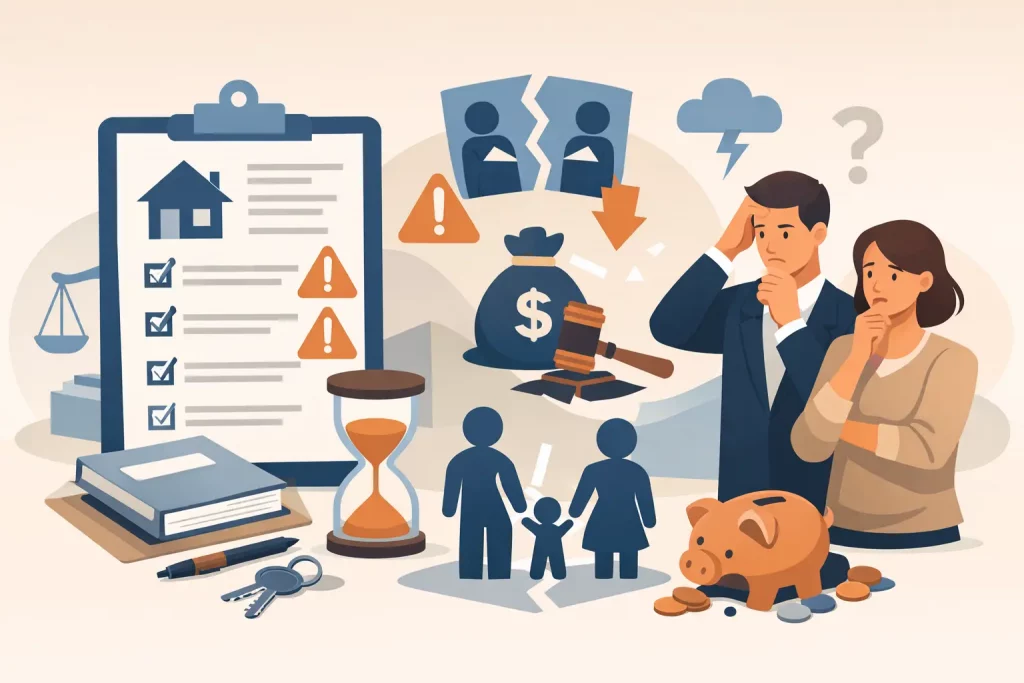
A surprising number of the top estate planning mistakes start with good intentions. People mean to sort out a will, mean to update paperwork after a major life change, or assume their family will simply know what they want. Sadly, that is often how confusion, delay and avoidable stress begin.
Estate planning is not only about what happens after death. It is also about protecting you while you are alive, making sure the right people can step in if you lose capacity, and reducing the chance of disputes at an already difficult time. When arrangements are clear and properly prepared, families usually have a far easier path.
Why top estate planning mistakes happen
Most mistakes are not caused by carelessness. They happen because estate planning feels easy to postpone. It sits on the to-do list next to jobs that seem less urgent than work, family life and day-to-day finances.
There is also a common belief that estate planning is only for the wealthy. In practice, homeowners, parents, unmarried couples, blended families and older people thinking about later life can all be affected. Even a modest estate can become complicated if the paperwork is missing, out of date or unclear.
1. Not making a will at all
This is still one of the most common and most damaging errors. If you die without a valid will, the rules of intestacy decide who inherits your estate. That may not reflect your wishes and can create real problems for families.
This matters especially for unmarried couples, stepchildren and anyone who wants to leave gifts outside the standard family line. Many people assume a long-term partner will automatically be protected, but that is not always the case. A will gives you control. Without one, you leave important decisions to a legal formula.
2. Forgetting to update your will
A will is not something you write once and forget forever. Life changes, and your documents should keep up. Marriage, divorce, remarriage, the birth of children or grandchildren, buying property, receiving an inheritance, or losing a loved one can all affect what your will should say.
An outdated will can create just as many difficulties as having no will at all. Gifts may go to the wrong person, executors may no longer be suitable, and family circumstances may have changed beyond recognition. Reviewing your will every few years, and after any major life event, is a sensible habit.
3. Assuming everything will pass automatically to the right person
People often believe their home, bank accounts and possessions will simply sort themselves out. Sometimes they do pass as expected, but often the position is more complicated. It depends on how assets are owned, whether beneficiary nominations are in place, and whether the estate includes property, pensions or savings in different names.
For example, jointly owned property can pass differently depending on the type of ownership. Pension death benefits may sit outside your will but still need the right nominations. If these details are overlooked, your broader estate plan can be undermined.
4. Choosing the wrong executors or attorneys
The people you appoint matter a great deal. Executors deal with your estate after death. Attorneys under a Lasting Power of Attorney can make decisions for you if you lose capacity. Both roles require trust, reliability and a calm approach to practical matters.
A common mistake is choosing someone out of politeness rather than suitability. The right person is not always the eldest child, nearest relative or closest friend. It should be someone capable of handling paperwork, communicating with others and acting in your best interests. In some families, appointing more than one person can provide balance, but too many decision-makers can also slow things down. This is one of those areas where the answer depends on family dynamics.
5. Overlooking Lasting Powers of Attorney
Many people focus only on the will and miss a crucial part of planning for later life. A will only takes effect after death. A Lasting Power of Attorney is what helps protect you during your lifetime if illness, injury or dementia leaves you unable to manage your affairs.
Without one, relatives may face a far more difficult and costly process to gain legal authority to help. That can affect bank accounts, bill payments, property decisions and health-related choices. For many families, arranging powers of attorney brings just as much peace of mind as writing a will.
6. Trying to deal with complex planning without proper advice
It is understandable that people look for simple, low-cost ways to put documents in place. But estate planning is one of those areas where small errors can have lasting consequences. Home ownership, second marriages, business interests, vulnerable beneficiaries and inheritance tax concerns can all require careful thought.
A basic document may not be enough if your circumstances are more involved. The aim is not to make things sound complicated for the sake of it. It is to make sure your arrangements fit your family, your assets and your wishes. Clear professional guidance can often prevent larger problems later.
7. Ignoring trusts where they may be helpful
Trusts are not right for everyone, but dismissing them too quickly can be a mistake. In the right circumstances, they can help protect children, manage gifts for vulnerable beneficiaries, ring-fence assets in blended families, or support longer-term planning for the family home.
The key point is that trusts are tools, not a standard answer. Used well, they can add protection and flexibility. Used badly, or added without understanding, they can create unnecessary complexity. This is why tailored advice matters so much.
8. Failing to plan for family tensions
Not every family situation is straightforward. Adult children may not get on. A second spouse may have different priorities from children of an earlier relationship. One child may have received substantial lifetime help while another has not. These issues do not disappear because they are awkward to discuss.
One of the top estate planning mistakes is leaving behind arrangements that are legally valid but emotionally explosive. Good planning often means looking ahead to where misunderstandings might arise and addressing them clearly. Sometimes that involves careful wording in a will. Sometimes it means having an honest conversation while you are able to explain your reasoning.
9. Leaving documents hard to find
Even well-prepared estate planning can fall down if nobody knows where the documents are. Families should know that a will exists, where the original is stored, and who the executors and attorneys are. They do not necessarily need to know every detail, but they should not be left searching through drawers in a crisis.
It also helps to keep a clear record of key information such as bank accounts, insurance policies, pension providers and funeral wishes. This is not about making things formal or burdensome. It is about reducing stress when your family needs clarity the most.
10. Treating estate planning as a one-off job
Estate planning works best when it is seen as an ongoing part of sensible life administration. Your finances change. Relationships change. Health can change quickly. Tax rules and legal rules can also shift over time.
A regular review keeps your arrangements aligned with real life. For some people, that means checking in every three to five years. For others, a review is needed much sooner because of retirement, moving home, a new marriage or a change in health. The best plan is one that still makes sense when your family eventually needs it.
How to avoid these estate planning mistakes
The good news is that most of these mistakes are preventable. Start by looking at the basics. Do you have a valid will? Is it current? Have you put Lasting Powers of Attorney in place? Do the people you have appointed still feel right for those roles?
Then step back and look at the bigger picture. Consider your property ownership, any previous marriages, children from different relationships, business interests, and whether a trust might be useful. Estate planning does not need to feel intimidating when it is explained in plain English and approached one step at a time.
For many people, the hardest part is simply getting started. Once that first conversation happens, the process is usually much more straightforward than expected. A specialist such as Your Will Writers can help turn a complicated-sounding subject into a clear plan built around your family and your wishes.
The best time to put proper arrangements in place is before there is any urgency. A little planning now can spare the people you care about a great deal of uncertainty later.