
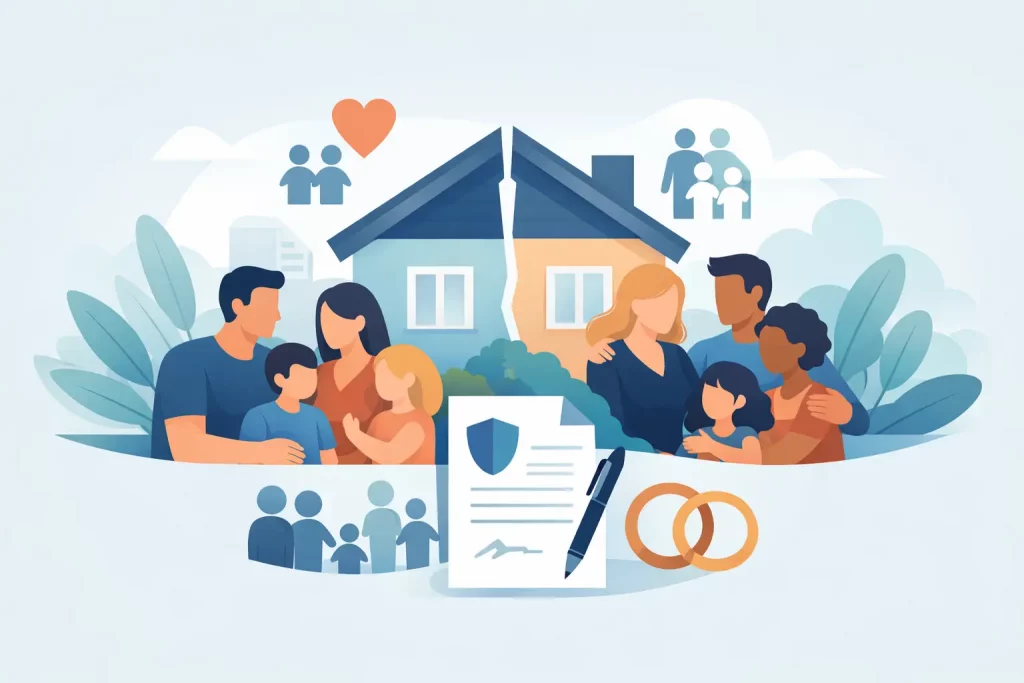
When a family includes children from previous relationships, a new spouse or partner, and shared assets built over time, a simple will often stops being enough. Estate planning for blended families needs more care because the people you love may not all have the same legal position, even if they are equally important to you.
That is where many families get caught out. A husband may assume his wife will “do the right thing” for his children from an earlier relationship. A mother may believe her stepchildren will automatically inherit something. An unmarried couple may think years together give them the same protection as marriage. Sadly, assumptions like these can lead to upset, disputes and outcomes nobody intended.
Why blended families need a different approach
Blended families are not unusual, but they do create added layers in estate planning. There may be children from a first marriage, children from a current relationship, stepchildren who feel like your own, and property that one person brought into the relationship before living together.
In legal terms, those relationships are not always treated equally. Stepchildren do not automatically inherit unless they are formally included. Unmarried partners do not have the same rights as spouses or civil partners. If you die without a valid will, the intestacy rules decide who benefits, and those rules rarely reflect the realities of modern family life.
This is why a standard document prepared without proper discussion can cause real problems. What feels fair emotionally and what happens legally can be very different things.
The most common risks in estate planning for blended families
One of the biggest concerns is balancing the needs of a surviving partner with the wishes you have for your children. For example, you may want your husband or wife to remain in the family home for life, but ultimately want your share of that property to pass to your own children. If you leave everything outright to your spouse, there is no guarantee those assets will later reach the people you intended.
That does not mean your spouse would deliberately ignore your wishes. Life simply changes. They may remarry, rewrite their own will, face care fees, or die without putting anything in place. In each of those situations, your children could receive less than you expected, or nothing at all.
Another issue is unequal contributions. One partner may have owned the home before marriage or may have received an inheritance they want protected for their own children. Without careful planning, those distinctions can disappear.
There is also the emotional side. Blended families can be close and supportive, but they can also carry old tensions, different expectations and concerns about fairness. A clear plan reduces the chance of confusion after death, when emotions are already high.
Start with what you want to achieve
Before choosing documents or structures, it helps to be clear about your priorities. Some people want to protect a surviving spouse above all else. Others want to ring-fence part of their estate for children from an earlier relationship. Many want both, which is possible, but it needs to be drafted properly.
You may also have different wishes for different assets. The family home, savings, pensions and life insurance are not always dealt with in the same way. A practical conversation should look at who owns what now, who relies on what, and what should happen if one person dies first or if both die together.
That early clarity matters because blended family planning is rarely about ticking a box. It is about getting the balance right.
Wills are essential, but wording matters
A valid will is usually the starting point, but the detail is where the real protection lies. In blended families, vague wording can create uncertainty, and uncertainty often leads to disagreement.
If you want stepchildren to benefit, they need to be named or clearly included within the wording. If you want a surviving partner to benefit during their lifetime while preserving capital for your children, the will should say exactly how that is to work. If certain sentimental items should go to specific people, that should be made clear too.
Choosing the right executors is equally important. The person dealing with your estate should be organised, impartial and capable of handling what can sometimes be sensitive family dynamics. It is not always best to appoint only one child or only the current spouse, particularly where interests may differ.
When trusts may help
Trusts can be especially useful in estate planning for blended families because they allow more control over what happens to assets after the first death. One common example is where a share of the home is placed into a trust so that a surviving spouse can continue living there, while the underlying share is preserved for children later on.
This can offer reassurance on both sides. The surviving partner has security and stability, while the deceased person’s children have protection against the asset being diverted elsewhere in future.
That said, trusts are not a one-size-fits-all answer. They must be suitable for your circumstances, and they should be explained in plain English before you decide. The right arrangement depends on the value of the estate, the ages and needs of the family, and how much flexibility you want to leave.
Property ownership can change the outcome
Many couples are surprised to learn that how a property is owned affects what happens on death. If you own your home as joint tenants, the property will usually pass automatically to the surviving owner, regardless of what the will says. For some couples, that is fine. For others, especially where children from earlier relationships are involved, it may not match their intentions.
Owning as tenants in common can allow each person to leave their share under their will instead. This is often worth discussing where asset protection is a concern.
The same principle applies beyond property. Bank accounts, life policies and pension death benefits may not pass under the will in the usual way. A proper review should look at the full picture rather than treating the will as if it controls everything.
Do not overlook lasting powers of attorney
Estate planning is not only about what happens after death. In blended families, incapacity can create just as much strain if nothing is in place. A lasting power of attorney allows trusted people to make decisions if you can no longer do so yourself.
This matters because family structures can become complicated very quickly in a crisis. An adult child may assume they can manage a parent’s affairs, only to find they have no legal authority. A current spouse may be left trying to sort out finances while facing resistance from other relatives. Clear appointments can prevent delay and reduce conflict.
For many families, putting wills and lasting powers of attorney in place together creates a much more complete plan.
Fair does not always mean equal
This is often the hardest part of the conversation. In blended families, equal shares are not always the same as fair outcomes. One child may already have received financial help. One partner may need more security because they are financially dependent. A family home may hold different emotional meaning for different people.
There is no universal formula. What matters is that your decisions are considered, realistic and clearly documented. In some cases, it may also be sensible to leave a written explanation alongside the will, particularly if someone is receiving less than they expect. That does not remove all risk, but it can help others understand your thinking.
Review the plan as family life changes
Blended families often continue to change over time. Children become adults, relationships improve or deteriorate, homes are sold, and grandchildren arrive. A plan that made perfect sense five years ago may now be out of date.
A review is sensible after marriage, divorce, moving house, receiving an inheritance, or any major change in family circumstances. Even where nothing dramatic has happened, revisiting your documents every few years is a good habit.
For many people, the greatest relief comes not from having every possible answer, but from knowing they have made sensible decisions and recorded them properly. That is exactly what thoughtful planning should provide – clarity for you now, and peace of mind for the people you care about later.
If your family setup is more complex than a standard form can handle, that is not a problem to avoid. It is simply a sign that you deserve advice that is personal, clear and built around the life you have actually lived.