
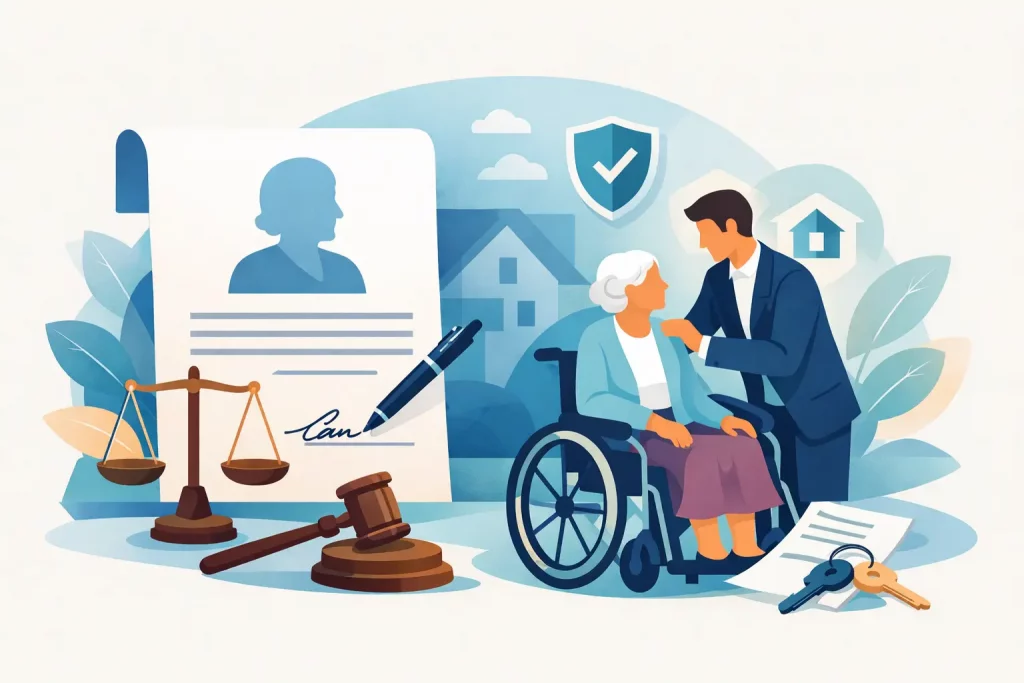
It often starts with something small. Mum forgets to pay the petrol bill. Dad is in hospital and nobody can speak to the bank. A family member says, “Surely I can just sign for them?” In most cases, you cannot. That is why looking at a power of attorney for elderly parent example can make the issue feel much clearer and much more urgent.
For many families, the challenge is not understanding that help may be needed one day. It is knowing what form that help should take, when to arrange it, and what authority is actually given. In the UK, a Lasting Power of Attorney, usually shortened to LPA, lets someone appoint trusted people to make decisions if they need support now or lose mental capacity later. It is a practical document, but it is also a very personal one.
A power of attorney for elderly parent example in real life
Take a simple example. Margaret is 82, widowed, and lives alone in her own home. She is still managing fairly well, but her memory is becoming less reliable. Her daughter, Helen, has started helping with shopping and keeping an eye on post. One month, Helen finds several unpaid bills in a drawer. Margaret also has a hospital appointment coming up, and the consultant wants to discuss treatment options.
Margaret decides she wants Helen to help formally, while she still understands what she is signing. She puts in place two LPAs. The first is for Property and Financial Affairs. The second is for Health and Welfare.
The Property and Financial Affairs LPA allows Helen to help with matters such as paying bills, speaking to the bank, dealing with pension income, and, if ever needed, managing the sale of Margaret’s home. Depending on how Margaret chooses to set it up, Helen may be able to help as soon as the LPA is registered, with Margaret’s permission, or only if Margaret loses mental capacity.
The Health and Welfare LPA is different. This can only be used if Margaret no longer has mental capacity to make those decisions herself. It allows Helen to be involved in decisions about care arrangements, daily routines, medical treatment, and in some cases life-sustaining treatment if Margaret has given that authority.
That is the basic shape of a power of attorney for elderly parent example. It is not about taking control away. It is about making sure the right person can step in properly if needed.
What an LPA does and does not do
A common worry is that signing an LPA means an elderly parent loses independence straight away. That is not how it works. While your parent still has mental capacity, they remain in control of their own affairs. The attorney is there to assist within the terms of the document, not to override them.
There are also limits. An attorney must act in the donor’s best interests. They cannot simply do whatever the family finds convenient. They must keep money separate, make sensible decisions, and follow the legal duties that come with the role. If there is abuse or serious concern, there are ways those actions can be challenged.
This is one reason it helps to choose attorneys carefully. The right person is not always the nearest relative or the eldest child. It should be someone trustworthy, organised, and able to handle sensitive decisions calmly.
The two types of Lasting Power of Attorney
In England and Wales, there are two separate LPAs, and many families need both.
Property and Financial Affairs
This covers practical financial matters. It may include managing bank accounts, collecting benefits or pension income, paying utility bills, handling investments, sorting insurance, and dealing with property. For an older parent, this is often the document that avoids immediate day-to-day problems.
It can be used with the donor’s consent once registered, which is useful where someone is still capable but finding paperwork, appointments, or banking increasingly difficult.
Health and Welfare
This covers care and personal decisions. It can include where a person lives, what care they receive, their daily routine, and medical treatment decisions. It only takes effect if the donor has lost mental capacity in relation to that decision.
Families sometimes assume next of kin status gives them automatic authority here. It does not. Healthcare professionals will consult relatives, but that is not the same as having legal authority under a Health and Welfare LPA.
Why timing matters
The biggest mistake families make is waiting too long. An LPA must be made while the person still has mental capacity to understand what they are signing. If capacity has already been lost, it is no longer possible to create one.
At that stage, the family may need to apply to the Court of Protection for a deputyship order. That route is usually slower, more expensive, and more restrictive than an LPA. It also places ongoing obligations on the deputy. In plain terms, it is usually far easier and less stressful to arrange LPAs early, before there is a crisis.
That does not mean every elderly parent needs one because they are old. Age alone is not the issue. The question is whether putting something in place now would create reassurance and prevent avoidable problems later.
Who should be appointed?
This is often where families hesitate. One child may live nearby, another may be better with money, and a third may be trusted by everyone but live abroad. There is no single answer that suits every family.
Some parents appoint one attorney because it keeps decision-making simple. Others appoint two or more attorneys to act jointly, or jointly and severally. Jointly means they must act together on every decision, which creates oversight but can be inconvenient. Jointly and severally means they can act together or separately, which offers flexibility but requires a high level of trust.
The best choice depends on family dynamics, personalities, and the type of help likely to be needed. What looks fair on paper is not always what works best in practice.
Questions families often ask when looking for a power of attorney for elderly parent example
One common question is whether an LPA can be used straight away. The answer depends on the type. A Property and Financial Affairs LPA can usually be used once registered, if the donor allows it. A Health and Welfare LPA cannot be used until capacity is lost.
Another question is whether a parent can restrict what an attorney does. Yes, they can include preferences and instructions, although these need to be drafted carefully. Overly narrow wording can cause problems later if circumstances change.
Families also ask whether the attorney owns the parent’s money or property. They do not. The assets still belong to the parent. The attorney is managing them on the parent’s behalf.
There is often concern about family disagreement too. An LPA can reduce conflict by making it clear who has authority, but it will not always remove tension entirely. Good communication while the parent is still able to express their wishes can make a significant difference.
Making the process feel manageable
Many people put this off because they expect it to be complicated or intimidating. In reality, the hardest part is often starting the conversation. Once an elderly parent understands that an LPA is there to protect their wishes, not take away their say, the discussion usually becomes easier.
It helps to focus on practical scenarios rather than legal language. Who would speak to the bank if there were an emergency? Who could help with care decisions after a hospital stay? Who would make sure bills, benefits, and household arrangements were handled properly if memory declined?
These are ordinary concerns for ordinary families. Planning for them is not pessimistic. It is sensible.
At Your Will Writers, this is exactly where clear guidance matters. Families usually do not need more jargon. They need someone to explain the options in plain English, make sure the documents reflect the parent’s wishes, and help them put proper arrangements in place without unnecessary stress.
If you are thinking about an LPA for a parent, treat it as a conversation to have while choices are still open. The best time is usually before anyone is under pressure, before health worsens, and before a temporary worry becomes a much bigger legal problem. A little planning now can preserve dignity, reduce family strain, and give everyone far more peace of mind.